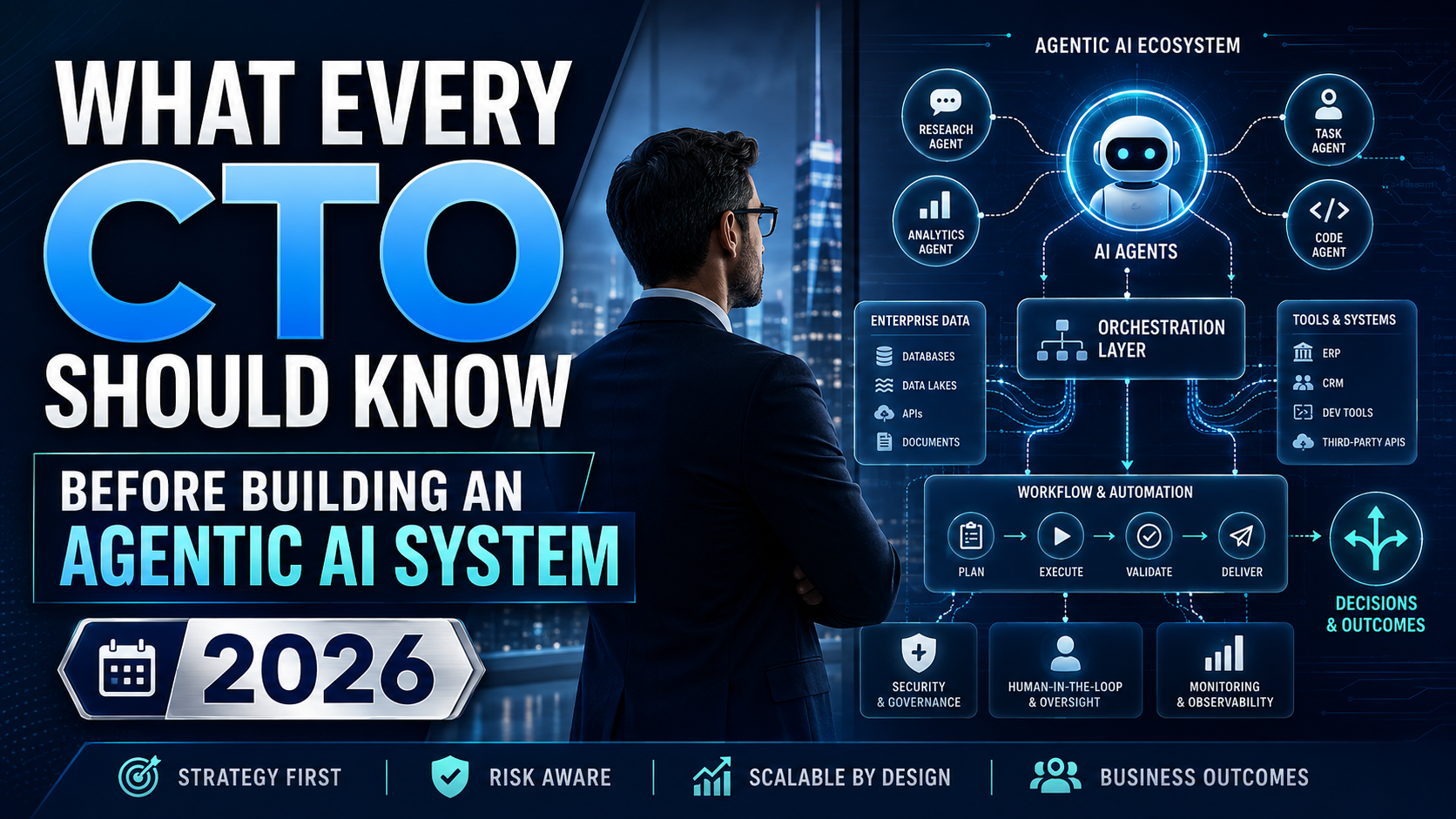
What Is an AI Leadership Team? A Complete Guide for Business Leaders in 2026
Last Updated : 03/08/2026
Estimated : 12 min read
Author : Smitha Thirumurugan

Table of Content
- Introduction
- What Is an AI Leadership Team?
- Why Every Organization Needs an AI Leadership Team in 2026
- Key Roles in an AI Leadership Team
- Core Responsibilities of an AI Leadership Team
- How to Build an Effective AI Leadership Team
- Common Challenges AI Leadership Teams Face
- AI Leadership Team vs. Traditional IT Leadership
- Conclusion
- Ready to build your AI leadership capability?
Introduction
Artificial intelligence has moved from an experimental side project to a core driver of business strategy. As organizations race to integrate AI for business into their products, operations, and decision-making, a new leadership structure has emerged to guide this transformation: theAI leadership team.
Adopting artificial intelligence in business is no longer just a technology decision — it's a leadership decision. But what exactly is an AI leadership team, why does your organization need one, and how do you build one that actually delivers results? This guide breaks down everything AI for business leaders need to know in 2026 — from the roles that make up an effective AI leadership team, to AI governance, to the strategies that separate AI-mature companies from the rest.
 Building an AI Leadership Team for 2026
What Is an AI Leadership Team?
An AI leadership team is a cross-functional group of executives and senior stakeholders responsible for setting the vision, strategy, governance, and execution roadmap for artificial intelligence across an organization. Unlike a typical IT or data science team, an AI leadership team operates at the intersection of technology, business strategy, ethics, and change management.
Its core mandate usually includes:
- Defining the organization's AI vision and strategic priorities
- Allocating budget and resources for AI initiatives
- Establishing AI governance, risk, and compliance frameworks
- Driving AI literacy and adoption across departments
- Measuring ROI and business impact of AI investments
- Managing the ethical and responsible use of AI systems
- Evaluating whether to build in-house capability or partner with an external AI leadership agency or consultancy
In short, this team acts as the bridge between AI's technical possibilities and the organization's business goals.
Why Every Organization Needs an AI Leadership Team in 2026
 The Core Roles That Make Up an AI Leadership Team
AI adoption is no longer optional — it's a competitive necessity. According to research fromMcKinsey's State of AI report, organizations that scale AI successfully are far more likely to see meaningful bottom-line impact than those that pilot AI in isolated silos without leadership alignment.
Without a dedicated AI leadership team, companies commonly run into:
- Fragmented AI initiatives — different departments building disconnected tools with no shared standards
- Poor governance — data privacy, security, and ethical risks left unaddressed
- Wasted investment — pilot projects that never scale because there's no executive sponsorship
- Slow adoption — employees resistant to change due to lack of training or clear communication
- Missed competitive advantage — falling behind competitors who have centralized AI strategy
A well-structured AI leadership team solves these problems by creating accountability, alignment, and a clear roadmap for AI-driven growth.
Key Roles in an AI Leadership Team
While the exact structure varies by company size and industry, most effective AI leadership teams include a combination of the following roles:
1. Chief AI Officer (CAIO)
The Chief AI Officer sets the overarching AI vision and ensures it aligns with business objectives. This role has become increasingly common at large enterprises as AI moves from a technical function to a boardroom priority, often working closely with a topAI Companiesecosystem of vendors, consultants, and technology partners to accelerate execution.
2. Chief Technology Officer (CTO)
The CTO ensures the technical infrastructure — cloud systems, data pipelines, and AI tools — can support the organization's AI ambitions.
3. Chief Data Officer (CDO)
Responsible for data quality, governance, and accessibility, since AI is only as good as the data it's trained on.
4. Head of AI Ethics / Responsible AI Lead
Oversees fairness, transparency, bias mitigation, and compliance with emerging AI regulations.
5. Business Unit Leaders
Representatives from sales, marketing, HR, finance, and operations who ensure AI initiatives solve real business problems rather than existing as isolated tech experiments.
6. Change Management / L&D Lead
Focuses on training employees, managing cultural resistance, and driving organization-wide AI literacy.
Core Responsibilities of an AI Leadership Team
Strategic Vision Setting
The team defines what success with AI looks like for the organization — whether that's operational efficiency, new revenue streams, or improved customer experience.
Governance and Risk Management
As AI regulation tightens globally, leadership teams must establish clear governance frameworks. Resources like theNIST AI Risk Management Frameworkoffer a useful starting point for structuring responsible AI governance.
Resource Allocation
Deciding where to invest — talent, tools, infrastructure — and prioritizing high-impact use cases over "AI for AI's sake" projects.
Cross-Functional Alignment
Ensuring that AI initiatives in one department (say, customer service chatbots) don't conflict with data policies set by another (like legal or compliance).
Performance Measurement
Establishing KPIs to track the real business impact of AI investments, not just adoption metrics.
How to Build an Effective AI Leadership Team
If your organization is starting from scratch, here's a practical roadmap:
- Start with executive sponsorship. AI transformation needs buy-in from the CEO and board level to succeed.
- Appoint a central AI leader. Whether it's a CAIO or a senior VP of AI Strategy, someone needs ownership.
- Build cross-functional representation. Include voices from every major business unit, not just IT.
- Establish clear governance early. Don't wait for a crisis to define your AI ethics and risk policies.
- Invest in AI literacy. Leadership teams should model continuous learning to encourage adoption at every level.
- Set measurable goals. Tie AI initiatives to specific, trackable business outcomes.
If you're also working on defining your broadertechnology roadmap, our guide on building a digital transformation strategy offers a complementary framework for aligning leadership around large-scale change.
Common Challenges AI Leadership Teams Face
- Talent shortages — skilled AI leaders and practitioners remain in high demand
- Data silos — fragmented data across departments slows AI initiatives
- Cultural resistance — employees fearing job displacement or distrustful of AI decisions
- Regulatory uncertainty — evolving global AI regulations require ongoing legal vigilance
- Balancing speed and caution — moving fast enough to stay competitive while managing real risks
Organizations that succeed treat these challenges as ongoing management priorities rather than one-time hurdles to clear.
AI Leadership Team vs. Traditional IT Leadership
| Aspect | Traditional IT Leadership | AI Leadership Team |
|---|---|---|
| Focus | System uptime, infrastructure | Strategic value creation from AI |
| Scope | Primarily technical | Cross-functional, business-wide |
| Metrics | System performance | Business ROI, adoption, ethics |
| Decision Speed | Often slower, process-driven | Needs agility to keep pace with AI innovation |
| Risk Focus | Security, compliance | Security, compliance, bias, transparency, and ethics |
This distinction matters because treating AI purely as a technical function — rather than a strategic business function — is one of the most common reasons AI initiatives fail to scale.
 A Practical Roadmap for Building Your AI Leadership Team
Conclusion
An AI leadership team is no longer a "nice to have" — it's becoming a foundational structure for any organization serious about thriving in an AI-driven economy. By bringing together strategic vision, technical expertise, ethical oversight, and cross-functional alignment, this team ensures that AI investments translate into real, measurable business value rather than scattered, disconnected experiments.
As we move further into 2026, the organizations that will pull ahead are the ones that treat AI leadership as seriously as they treat financial or operational leadership. Building the right team today isn't just about keeping up with technology — it's about future-proofing your entire business.
If your organization is beginning to formalize its AI strategy, start small: appoint a clear owner, bring the right voices to the table, and build governance frameworks before scaling. The rest will follow.
Ready to build your AI leadership capability?
VeeTee Technologies helps organizations define AI strategy, establish governance frameworks, and build the leadership structures that turn AI investment into measurable business outcomes.Contact our expertstoday to discuss where your organization should start.
Get in Touch
Contact Us
+91 9500945700
adm@vttech.in
No: 8/65, 1st Floor, Radhakrishnan Street, Shankaran Avenue, Velachery, Chennai, Tamil Nadu – 600042, India.
We’re here to help you !