Custom Web Application Development in the UAE & Singapore: Build, Buy, or Offshore?
Last Updated : 30/09/2026
Estimated : 14 min read
Author : Lokesh A
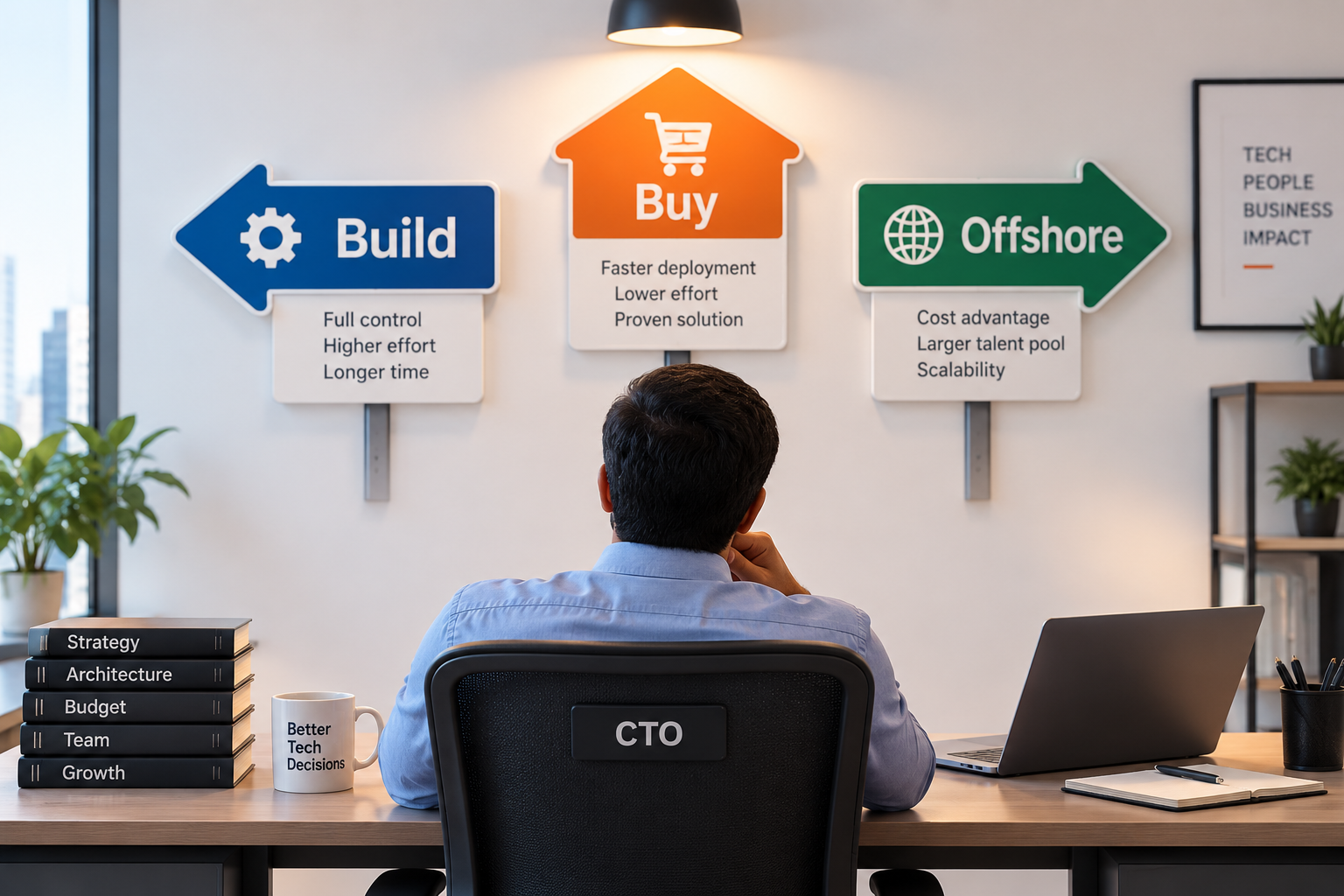
Table of Content
- The Question That Gets Decided by Instinct, Not Math
- Why This Stopped Being a Two-Way Choice
- What Each Path Actually Costs in 2026
- The Hidden Costs Neither "Build" nor "Buy" Advertises
- What Changes Specifically for UAE and Singapore Businesses
- A Practical Decision Framework
- How VeeTee Approaches This Decision With Clients
- A Realistic Example
- What's Changing Next
- Frequently Asked Questions
- The Bottom Line
The Question That Gets Decided by Instinct, Not Math
Ask a room full of CTOs whether to build a new web application in-house, buy something off the shelf, or bring in an offshore team, and you'll usually get a fast answer. The trouble is, that answer is often based on what worked last time, or what a competitor did, rather than a genuine calculation for the project in front of them.
This decision deserves better than instinct, especially for UAE and Singapore businesses, where talent costs, regulatory requirements, and time-to-market pressure all pull in different directions depending on your specific situation. This article gives you an actual framework, with real numbers, to make this decision properly.
Why This Stopped Being a Two-Way Choice
For years, "build vs buy" was framed as exactly two options. In 2026, that framing is genuinely outdated. Most enterprise software decisions now involve three real paths: build entirely in-house, buy an off-the-shelf product, or bring in an outsourced partner to build something custom for you (source:Eastgate Software, Build vs. Buy Software: A 2026 Decision Framework).
There's often a fourth variation worth naming too: buying a flexible platform and extending it through APIs and low-code tools, rather than building from a blank page or accepting a rigid, unmodified product (source:Zylo, Build vs Buy Software: Pros and Cons, Costs, and How to Decide).
Each path has a genuinely different cost structure, a different risk profile, and a different timeline. The right one depends on your specific project, not a general company-wide policy.
What Each Path Actually Costs in 2026
Real numbers help cut through the guesswork here.
Building custom software typically costs between $25,000 and $180,000 for most web applications, with mid-market builds commonly landing in the $60,000 to $150,000 range. Enterprise-grade platforms can exceed $400,000 (source:TekRevol, Web App Development Cost in 2026). On top of the build itself, plan for 15% to 25% of that cost every year in ongoing maintenance, hosting, and security work.
Buying off-the-shelf software looks cheaper upfront, often ranging from $5,000 to $30,000 for ready-made or low-code solutions (source:EnlightLab, Web Application Development Cost in 2026). But this comparison is frequently unfair, because it stops at the sticker price.
Offshore, partner-led development tends to sit between the two. It's usually faster than building an in-house team from scratch, and more customisable than an off-the-shelf product. But it carries its own risk, specifically around choosing the right partner (source:Eastgate Software).
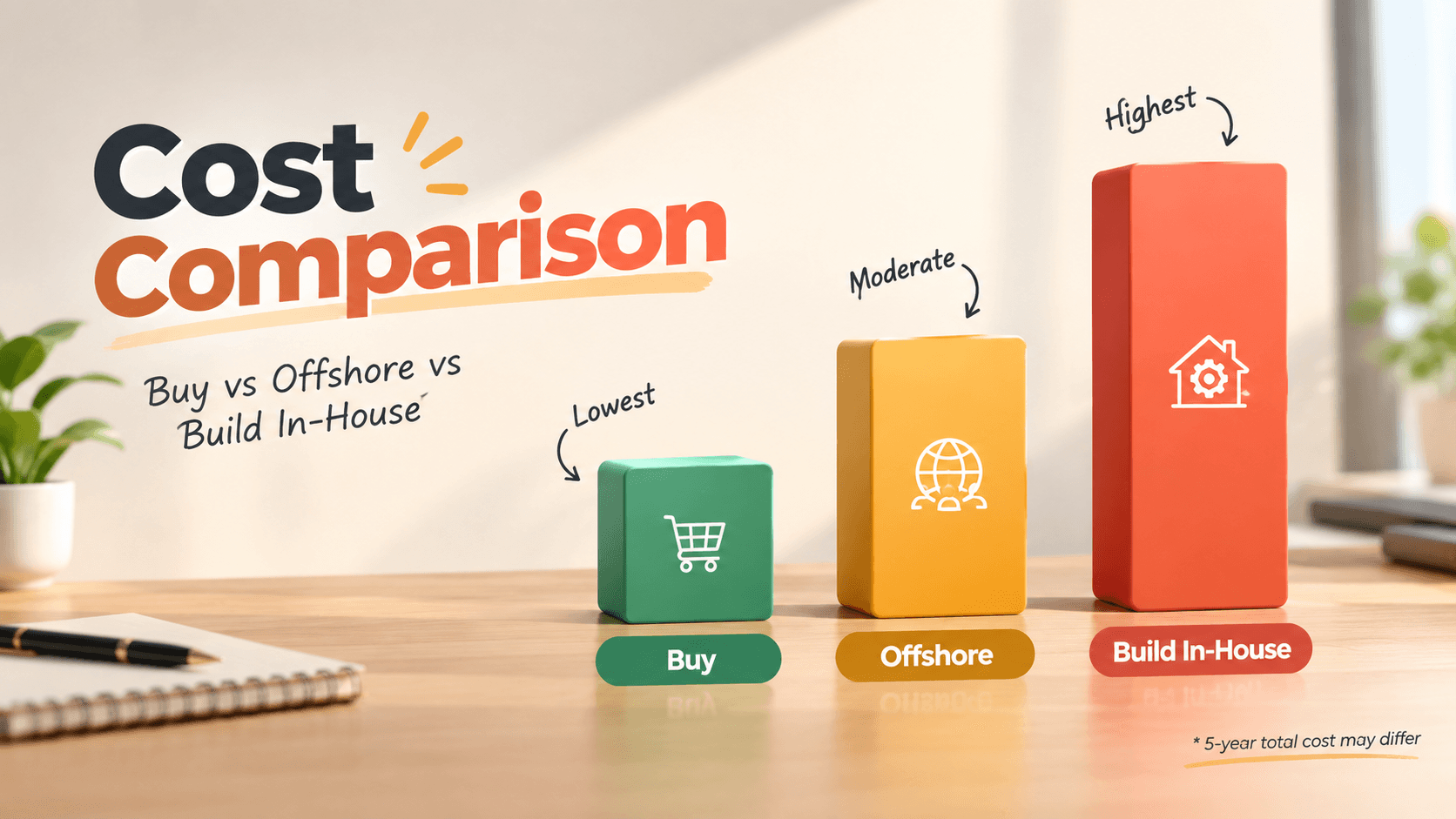 Typical upfront cost: buying is lowest, offshore sits in the middle, building in-house is highest — five-year totals can differ
The Hidden Costs Neither "Build" nor "Buy" Advertises
This is where most companies get the decision wrong. Not by choosing badly, but by comparing the wrong numbers.
Buying hides its real cost in what comes after the purchase. Your team still needs to handle integration, configuration, data migration, staff training, and ongoing oversight. None of this shows up in the subscription price (source:Eastgate Software). There's also what one analysis calls the "Adaptation Tax" — the hidden cost of forcing your team to change their efficient way of working to match a rigid third-party tool (source:Founders Workshop, Build vs Buy: 2026 Enterprise Software Decision Guide). If your staff spends more time working around the software than working with it, the speed advantage of buying quietly disappears.
Building hides its real cost in the years after launch, not the initial invoice. Cloud hosting bills, ongoing headcount, and the opportunity cost of your best engineers working on internal tools instead of customer-facing features all accumulate quietly over time.
The honest way to compare these options is a five-year total cost of ownership, not a one-time quote. A common mistake is comparing a single development invoice to a monthly subscription fee. This narrow view misses where the real financial impact actually lives (source:Founders Workshop). Buying often looks cheaper in year one. By year three, compounding subscription costs and workaround time frequently flip that comparison entirely.
What Changes Specifically for UAE and Singapore Businesses
Two regional factors make this decision meaningfully different here than in a generic global guide.
UAE businesses often need enterprise systems that connect cleanly to newer national digital requirements — from tax and invoicing systems to sector-specific regulatory reporting. An off-the-shelf product built for a different market may not integrate with these smoothly. This pushes more UAE businesses toward custom or partner-built solutions than the global averages might suggest.
Singapore's talent market is highly competitive, which changes the "build in-house" calculus specifically. Hiring and retaining strong in-house engineering talent in Singapore carries a real cost premium compared to many other markets. This makes the offshore-partner path relatively more attractive for companies that don't consider engineering their core differentiator.
In both markets, enterprise web applications commonly need to connect to existing systems — ERPs, CRMs, and legacy databases already in place. This is exactly where a generic off-the-shelf product tends to struggle most. It's also where custom or partner-led development earns back its higher upfront cost.
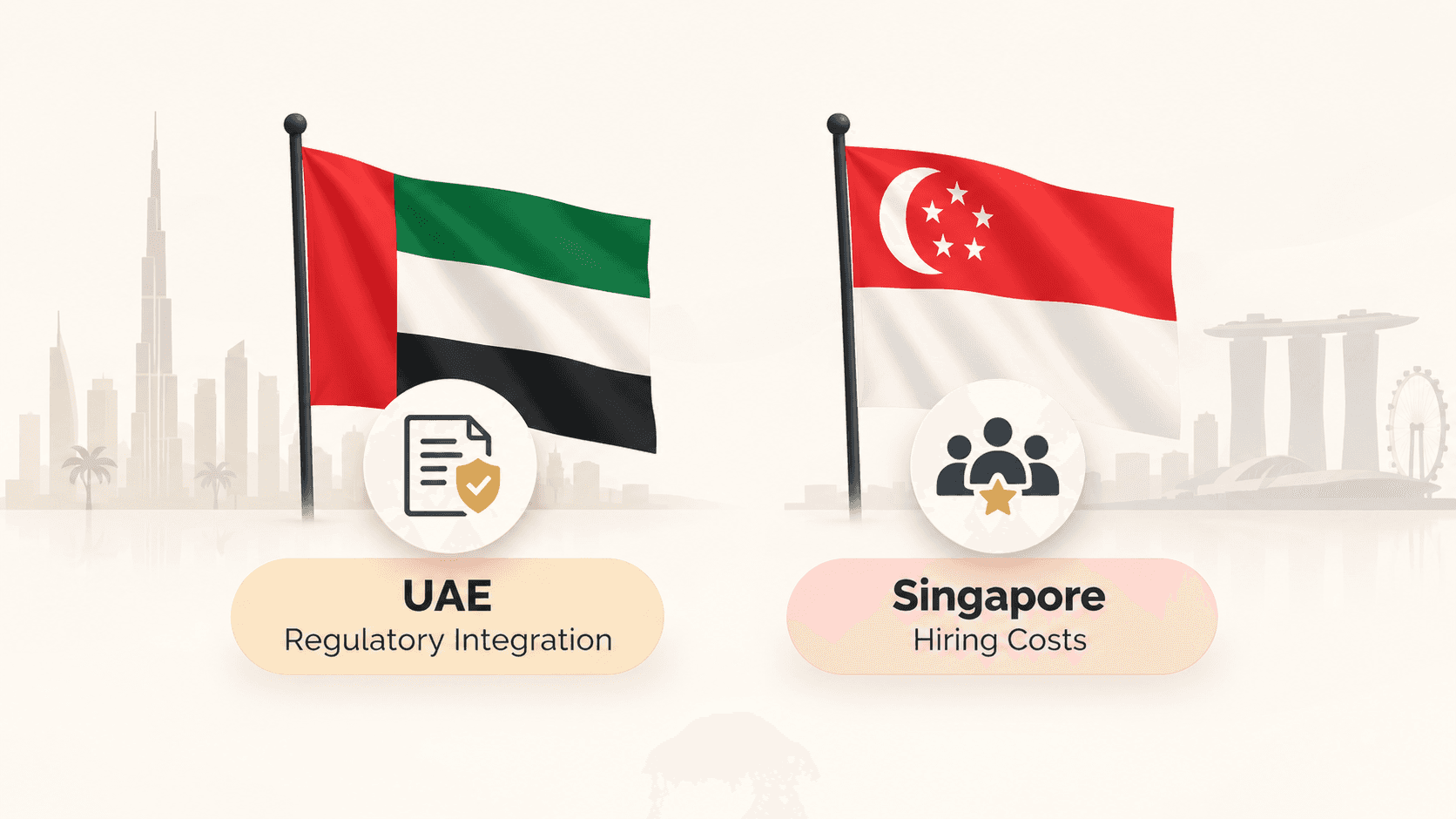 UAE: integration with national tax, invoicing and regulatory systems · Singapore: the cost of in-house engineering talent
A Practical Decision Framework
Work through these questions in order, honestly, before deciding.
- Is this system core to your competitive advantage, or a commodity need? If it's genuinely core — something that differentiates you from competitors — building or partnering for a custom solution usually wins. If it's a commodity need like standard accounting, buying is almost always the better call.
- Can your internal team realistically own this long-term? Building only works well if you can hire, retain, and manage the right engineering talent over years, not just for the initial build. Be honest about your actual hiring pipeline, not an optimistic one.
- What does your actual five-year cost look like, for each path? Don't compare a single quote to a monthly fee. Model out maintenance, integration, and opportunity costs for all three options over the same time horizon.
- How fast do you genuinely need to move? Buying is fastest for standard needs. A good offshore partner is usually faster than building an in-house team from zero. Building in-house from scratch is typically the slowest path to a working product.
- What happens to compliance requirements as you scale? Building compliance in from the start — the right standards for data handling and security — costs relatively little. Retrofitting it later, after a system is already live, costs considerably more (source:TekRevol).
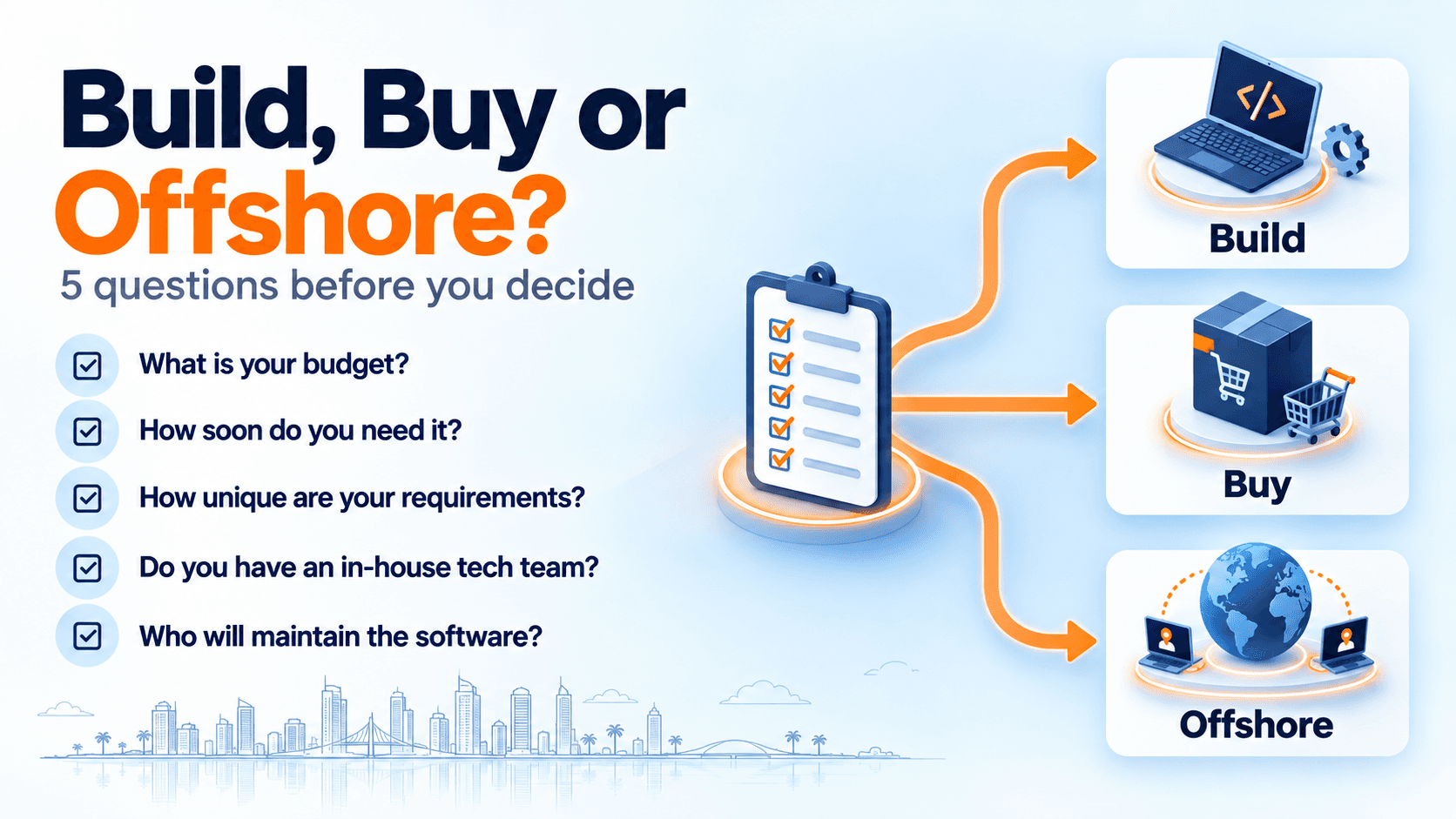 Five questions, worked through in order, lead to one of three paths: build, buy or offshore
How VeeTee Approaches This Decision With Clients
VeeTee's Web Application Development teamstarts every engagement with this exact framework. We don't default to assuming custom development is always the answer:
- An honest build-vs-buy-vs-partner assessment, including cases where we'd recommend a client buy an existing product rather than build with us.
- A structured discovery phase before any development begins, typically two to four weeks, producing a scoped plan and a realistic cost estimate. This alone prevents the majority of budget overruns we see in rushed projects.
- Security and compliance built in from day one, not treated as a future add-on once UAE or Singapore-specific requirements become urgent.
- Direct integration experience with the ERP, CRM, and legacy systems most enterprise clients already run, including our own work inSAP integrationandOracle database support.
For a deeper look at evaluating any development partner, not just VeeTee, see our guide onchoosing the right custom software development partner in 2026.
A Realistic Example
Picture a mid-sized trading company in Dubai needing a new internal system to manage inventory across multiple warehouses, with real-time visibility for both warehouse staff and finance.
Their first instinct was to buy an off-the-shelf inventory management product, since several looked feature-complete in demos. During a proper discovery phase, it became clear that connecting the product to their existing finance system would require significant custom middleware. This work wasn't included in the subscription price, and no off-the-shelf vendor could estimate it accurately upfront.
After running the five-year cost comparison properly, a partner-led custom build turned out to cost more in year one. But it cost meaningfully less by year three, once the ongoing integration workarounds and subscription costs for the "cheaper" option were counted honestly. The company chose the custom path — not because building is always better, but because this specific project's integration needs made the honest math clear.
What's Changing Next
AI-assisted development is genuinely changing build costs, not just build speed. As AI tools help developers write code faster, the cost gap between building custom and buying off-the-shelf is narrowing for certain types of projects. This is worth revisiting periodically rather than assuming today's cost ratios hold indefinitely.
Integration requirements keep growing, not shrinking. UAE and Singapore businesses keep adopting more specialised digital tools — for compliance, for analytics, for customer engagement. The number of systems any new application needs to connect to keeps increasing. This tends to favour custom and partner-led builds over rigid off-the-shelf products.
The "buy and extend" middle path is gaining ground. More companies are choosing to buy a flexible platform and extend it with custom code, rather than picking a pure build or pure buy. This trend is likely to continue as more platforms open up genuine API-based customisation.
Frequently Asked Questions
Not always — it depends on project complexity and duration. For long-running, deeply strategic systems, in-house ownership can be worth the higher cost. For most standard business applications, offshore partnership is often more cost-effective over a realistic time horizon.
It varies enormously by scope, but a proper discovery phase (two to four weeks) followed by a phased build is a realistic pattern. Projects that skip discovery to save time commonly face larger overruns later.
Built in from the start, wherever realistically possible. Retrofitting compliance and security standards after a system is already live and in use is consistently more expensive and disruptive than designing for them upfront.
For genuinely standard needs, yes. But if meaningful custom integration work is required to make a purchased product actually useful, the real timeline can end up longer than a well-scoped custom build.
Comparing an upfront cost for one option against a different time horizon for another. For example, a one-time build quote against a single year of subscription fees, rather than the same multi-year period for both.
The Bottom Line
Build, buy, or offshore isn't a decision that should be made the same way every time. It depends on how strategic the system is, what your team can realistically own, and what the honest five-year cost actually looks like for your specific situation. Run the real numbers, not the instinct, and the right answer usually becomes clear.
Talk to VeeTee's web application team — see a live portfolio walkthrough.Schedule a consultationor exploreVeeTee's Web Application Development servicesin detail. Visitveeteetechnologies.comto see our full range of services.
Related Reading on the VeeTee Blog
External Sources Referenced in This Article
- Eastgate Software —Build vs. Buy Software: A 2026 Decision Framework
- Zylo —Build vs Buy Software: Pros and Cons, Costs, and How to Decide (2026)
- TekRevol —Web App Development Cost in 2026: What You'll Actually Pay
- EnlightLab —Web Application Development Cost in 2026 (Complete Guide)
- Founders Workshop —Build vs Buy: 2026 Enterprise Software Decision Guide
Cost figures in this article reflect published industry estimates as of 2026 and vary significantly by project scope and vendor — use them as a starting point for your own five-year cost model, not a fixed quote.
Get in Touch
Contact Us
+91 9500945700
adm@vttech.in
No: 8/65, 1st Floor, Radhakrishnan Street, Shankaran Avenue, Velachery, Chennai, Tamil Nadu – 600042, India.
We’re here to help you !